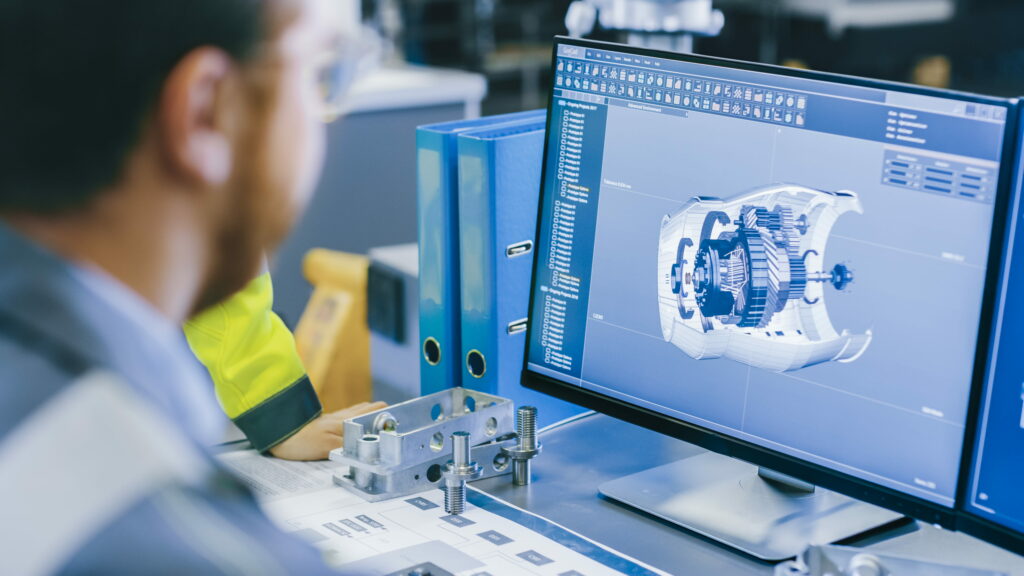



A PLM (Product Lifecycle Management) software is a platform that enables the centralized management of all information, documents, and processes related to a product throughout its entire lifecycle.
From the initial design phase to production, maintenance, and product disposal, a PLM ensures that all information is always up to date, traceable, and shared across all company departments.
The goal of a Product Lifecycle Management is not simply to store data, but to create a single, reliable source of product information accessible to all functions involved in product development and management.
Why has the PLM become strategic for manufacturing companies?
Manufacturing companies today operate in an environment characterized by increasing complexity.
Products are becoming more and more customized, variations are expanding, regulatory requirements are multiplying, and development cycles are shrinking. In parallel, the volume of information that must be managed and kept consistent over time is growing.
CAD drawings, Bills of Materials (BOMs), technical specifications, quality documentation, operating instructions, and configuration data represent just a fraction of the information that accompanies a product throughout its lifecycle.
Managing this data effectively has become a fundamental competitive factor.
The problem of product information fragmentation
In many manufacturing companies, information is distributed across different and often not fully integrated systems.
The engineering department uses CAD software and PDM systems, production works within the ERP, the quality department manages dedicated documentation, and a large part of communications still takes place via email, Excel spreadsheets, or local archives.
This fragmentation creates a significant problem: the same product can be represented in different ways within the organization.
The consequences are well known:
- errors due to outdated data;
- duplication of information;
- difficulty in managing revisions;
- slowdowns in decision-making processes;
- increase in operating costs.
When a single view of the product is missing, maintaining control becomes increasingly difficult.
How does the PLM software solve the problem of information silos?
The PLM is designed to eliminate data fragmentation and create a collaborative environment based on shared information.
All product-related information is organized within a single, consistent model. Every document, component, Bill of Materials (BOM), or revision is connected to other elements through structured relationships.
This approach transforms a simple collection of files into a true digital model of the product.
Thanks to the PLM, all company departments work on the exact same information base, reducing ambiguity and misalignment between teams.
Product lifecycle management and revision control
One of the most important aspects of a PLM software is the structured management of product evolution over time.
Every engineering change is recorded, approved, and tracked. Revisions are controlled through defined workflows, and every decision is historicalized.
This guarantees:
- full traceability of changes;
- control of engineering revisions;
- reduction of version errors;
- greater compliance with regulatory requirements;
- availability of always up-to-date data.
Traceability represents one of the main advantages of Product Lifecycle Management, especially in highly complex manufacturing sectors.
Improving collaboration between engineering, production, and quality
One of the most evident benefits of a PLM concerns interdepartmental collaboration.
When all stakeholders involved access the same information, divergent interpretations decrease and operational efficiency increases.
The engineering department, production, quality, purchasing, and the supply chain can work on shared data updated in real time.
This makes it possible to reduce errors, accelerate processes, and improve the quality of business decisions.
The PLM as the foundation of manufacturing digitalization
Today, the PLM represents one of the key technologies of digital transformation in the manufacturing sector.
It is not just a software, but a strategic platform that connects people, processes, and information throughout the entire product lifecycle.
Integrated with ERP, CAD, MES, and other enterprise systems, the PLM becomes the central point of product information management and supports the organization’s growth over the long term.
A PLM software allows manufacturing companies to manage data, documents, processes, and revisions in a structured way throughout the entire product lifecycle.
By centralizing information and improving collaboration between departments, Product Lifecycle Management reduces operational complexity, increases traceability, and creates the foundation for more efficient and scalable product management.
For this reason, the PLM is today considered an essential component of modern manufacturing digitalization and a strategic tool for companies looking to improve competitiveness, control, and innovation capacity.