


Why has the PLM become strategic for manufacturing companies?
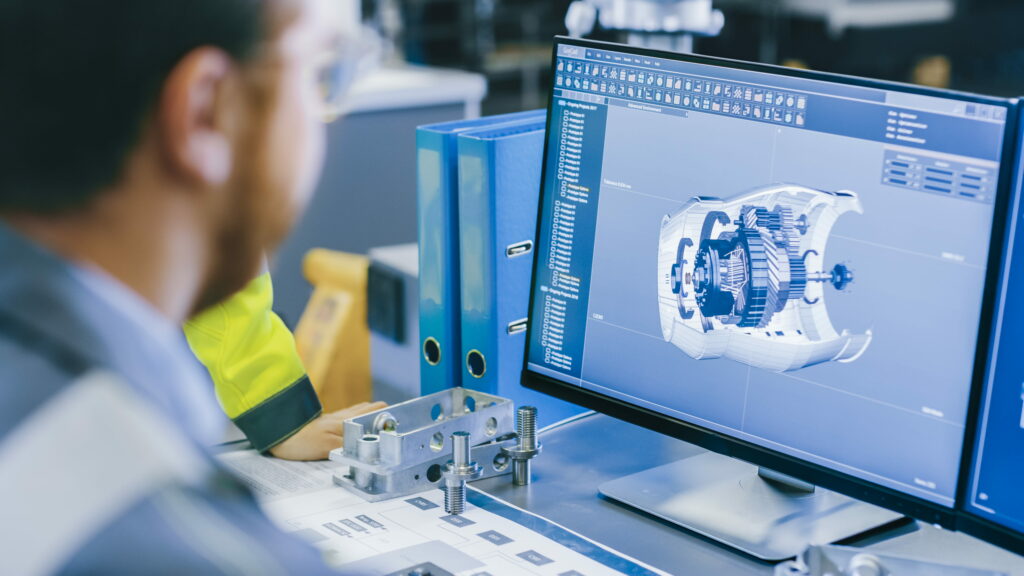
In today’s manufacturing environment, managing product information has become increasingly complex. CAD drawings, bills of materials (BOMs), engineering revisions, quality documentation, and production data must always be consistent, up-to-date, and shared across different company departments. In this scenatio, the PLM (Product Lifecycle Management) software represents a strategic tool to improve efficiency, control, and collaboration throughout the entire product lifecycle. The concrete benefits of a PLM software can be summarized as:
- reduction of operational errors
- reduction of non-productive time
- better collaboration between different business sectors
- standardization and control of business processes
- product complexity management
- reduction of time-to-market
- improvement of product quality
- information traceability
- faster decision-making
But let’s look at these points in detail
Benefits of a PLM software: reducing errors
One of the primary benefits of a PLM software is the drastic reduction of operational errors.
When product information is scattered across local folders, ERP systems, Excel spreadsheets, and emails, the risk of using outdated increases significantly. This leads to manufacturing mistakes, rework, scrap, and delays.
With a PLM system, however, all information is centralized within a single source. Every department accesses the exact same up-to-date database, eliminating versioning issues and document inconsistencies.
Key benefits:
- elimination of duplicate versions
- reducction of engineering and manufacturing errors
- greater data reliability
- better revision control
Reducing non-productive time
In many manufacturing companies, a significant portion of technical time is spent searching for the correct information, verifying revisions, and aligning data across different systems.
This time does not generate value and slows down business processes.
The PLM software drastically reduces these inefficiencies by making information instantly available, structured, and contextualized.
The result is:
- less time wasted searching for data;
- increased productivity of thecnical teams;
- more time dedicated to engineering and innovation;
- reduction of manual and repetitive tasks.
Improving collaboration between departments
One of the most frequent problems in manufacturing companies is the misalignment between the engineering department, production, quality, and the supply chain. Without a shared system, each function tends to manage data independently, creating misunderstandings and information loss.
PLM, on the other hand, introduces a single, shared data model that becomes the point of reference for all departments involved in the product lifecycle.
The PLM promotes a:
- more effective communication;
- greater cross-functional collaboration;
- alignment between engineering and manufacturing;
- structured information sharing.
Standardization and control of business processes
With PLM software, processes are no longer managed informally or in an unstructured way.
Activities such as:
- engineering changes;
- approvals;
- document reviews;
- release management.
are organized through structured and traceable workflows.
This makes it possible to:
- standardize processes;
- increase operational predictability;
- reduce dependency on individual knowledge;
- improve governance and control.
Managing product complexity
As product variants, configurations, and customization increase, maintaining control over information becomes increasingly difficult.
PLM allows companies to manage complexity in a structured way, maintaining clear relationships between components, bills of materials (BOMs), configurations, and revisions.
Key benefits include:
- control of product variants;
- reduction of duplications;
- greater consistency across configurations;
- better management of complex bills of materials.
Reducing time-to-market
One of the most strategic benefits of PLM is the reduction of time-to-market [External link]. By eliminating errors, rework, and non-productive time, PLM accelerates the entire product development process.
This does not simply mean “working faster,” but systematically eliminating all the inefficiencies that slow down the operational workflow.
This allows companies to:
- introduce new products more quickly;
- respond better to market demands;
- increase competitiveness and innovation capacity;
- improve decision-making speed.
Improving product quality
PLM also improves final product quality thanks to the constant alignment between engineering, manufacturing, and quality control.
The availability of consistent and up-to-date data reduces the risk of:
- defects
- non-conformities;
- manufacturing errors;
- document discrepancies.
The result is:
- greater product reliability;
- reduction of non-quality costs;
- better compliance with requirements;
- increased customer satisfaction.
Complete information traceability
A PLM software guarantees complete traceability of product information. Every change, revision, or decision is recorded and tracked historically within the system.
This represents a key advantage for:
- audits;
- certifications;
- technical analysis;
- continuous improvement;
- regulatory compliance.
The ability to reconstruct the entire history of the product increases control and reduces operational risks.
Faster decision-making thanks to reliable data
When company data is fragmented, decisions become slow and are often based on incomplete information. The PLM, on the other hand, creates a single, reliable, and always up-to-date database that supports faster and more effective decision-making.
This allows companies to:
- reduce uncertainty;
- improve planning;
- increase decision-making speed;
- support data-driven strategic decisions.
The PLM as a strategic lever for business transformation
PLM software (much like PDM software) is not just a technological tool, but a true shift in a company’s operational model. By bringing the benefits of centralized data, streamlined processes, and enhanced collaboration, PLM transforms product management from a fragmented, reactive activity into a structured, integrated, and controlled system.
For manufacturing companies looking to navigate growth, complexity, and innovation, The PLM currently represents a fundamental strategic lever to improve efficiency, quality, and competitiveness.